Serving Riverbank, CA and surrounding areas. (209) 719-2309
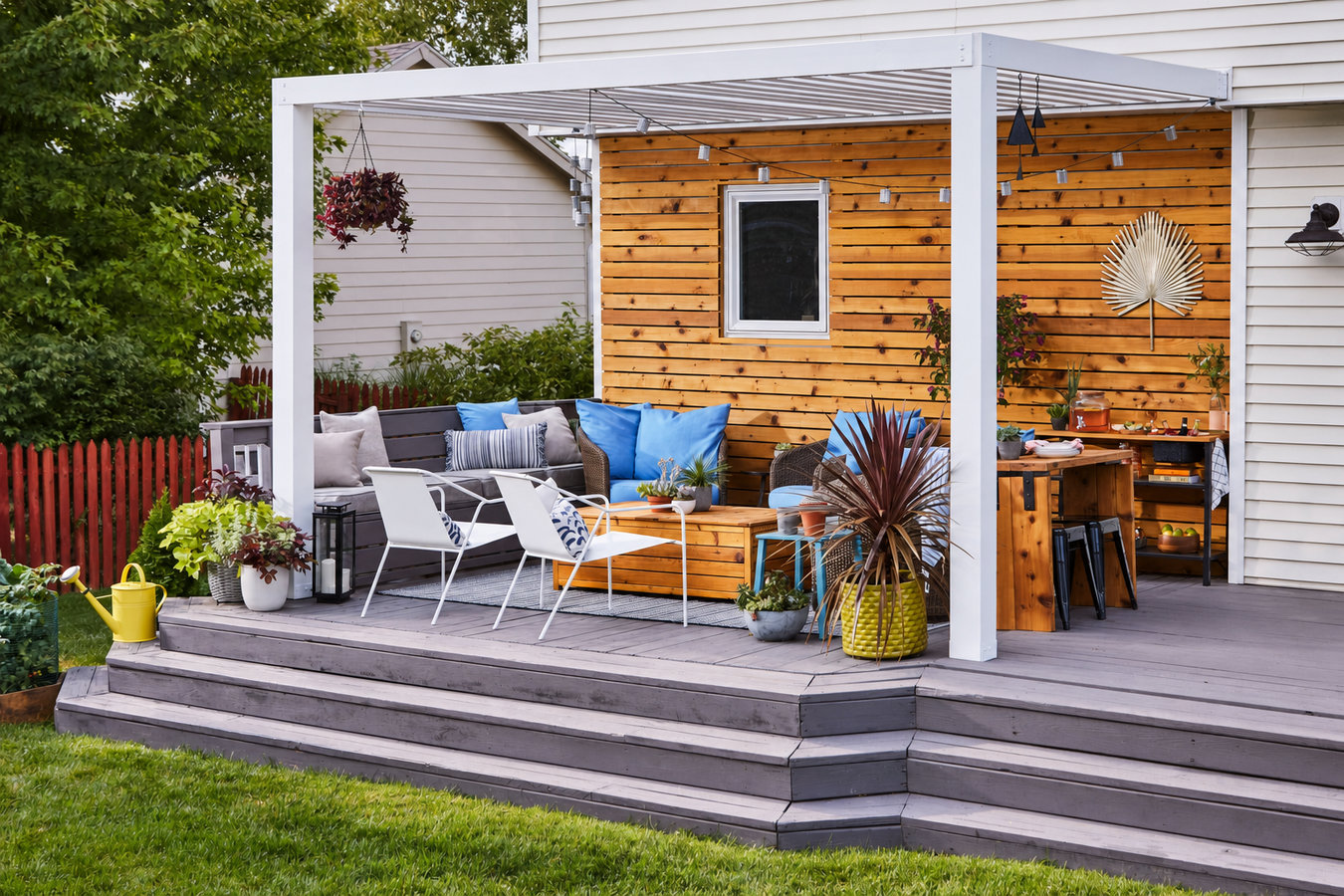
Riverbank summers push past 100 degrees for weeks at a time. A properly built patio cover keeps your outdoor space usable through the hottest months instead of sitting empty from June to September.
Covered decks and patio covers in Riverbank involve digging and pouring concrete footings, setting posts, framing the roof structure, and installing the roofing material of your choice - most projects take three days to two weeks of construction, with the full timeline from first call to a finished, inspected cover running four to six weeks once City of Riverbank permits are included.
The most important decision is whether you want a solid roof - one that blocks rain and blocks the sun - or an open lattice design that lets in filtered light while still providing meaningful shade. Both work in Riverbank's climate, but a solid insulated roof makes a bigger difference in the peak of summer and keeps the space dry through winter rain. If you eventually want to add screens to the sides, a solid-roof covered patio is also easier to convert to a fully enclosed screened porch down the road.
Clay-heavy soil throughout Stanislaus County means footings need to be dug and poured to the right depth and concrete mix - a step that separates a cover that stays straight for 20 years from one that begins to lean after the first few wet seasons.
If Riverbank's summer heat keeps you inside from late morning until after sunset, your outdoor space is not working for you. A patio cover with proper shade can make your yard genuinely usable during the hottest months. If you find yourself looking at a patio you never use, that is a clear sign a cover would change your daily life.
If your patio is just an exposed concrete slab or an uncovered wood deck, you are missing out on the most-used months of the year in the Central Valley. Rain in winter and brutal sun in summer mean an uncovered space sits empty for much of the year. A cover turns that underused square footage into a real outdoor room.
If you have gone through multiple umbrellas or shade sails that the Valley's summer winds have destroyed, a properly permitted and engineered cover is the permanent fix. Temporary shade solutions in this climate tend to be a recurring expense rather than a real solution.
In Riverbank's housing market, a finished outdoor living space photographs well and stands out to buyers who know how hot summers get here. A patio cover is one of the faster ways to close the gap between your yard and neighboring homes before you list.
An attached cover is the most popular choice - it connects to your home's exterior wall or roofline, uses that structure for support, and creates a seamless transition from indoors to outside. For patios or seating areas that sit away from the house, a freestanding cover stands on its own posts and can be placed wherever the yard layout makes the most sense. Both types require permits through the City of Riverbank and both need footings sized for the local soil.
Once you settle on attached or freestanding, the roofing style is the next choice. A solid insulated panel or shingle-match roof gives you full shade and rain protection. A lattice or open-beam design lets in more light and costs less but provides less heat relief on the hottest days. If you are also considering a more open-air structure with a decorative feel, our pergola installation service covers that option as well - and we can help you compare the two based on how you plan to use the space.
Best for homeowners who want a covered outdoor room that connects directly to the back of the house, using the existing wall or roofline for support.
Best for covering a detached patio slab, a pool area, or any space away from the house where an attached structure is not possible or preferred.
Best for maximum rain and sun protection - the roof panels match your home's shingles or use insulated aluminum panels that block radiant heat.
Best for homeowners who want filtered light and airflow rather than full shade - lower cost than a solid roof and works well in Riverbank's lower-rain winters.
Riverbank sits in the northern San Joaquin Valley, where summer temperatures regularly exceed 100 degrees F and heat waves can last for weeks. A patio cover without adequate shade or ventilation can actually make an outdoor space feel hotter by trapping radiant heat - so the design matters more here than in cooler climates. When getting quotes, ask specifically how the contractor plans to handle heat management, not just rain protection. The North American Deck and Railing Association publishes outdoor structure standards that address material selection for high-heat climates - worth referencing when comparing contractor proposals.
Fall is generally the best time to start a patio cover project in Riverbank. The extreme summer heat has passed, tule fog has not settled in yet, and a fall build means your cover is ready before the following summer. Many homeowners in Ceres and Salida face the same Central Valley heat and the same seasonal timing pressures - the contractors who know this area build that reality into the project timeline from the first conversation.
Tell us the size of your patio, whether you want the cover attached or freestanding, and roughly what style you have in mind. We reply within one business day and schedule a free on-site visit - you do not need to have everything figured out before you call.
We visit your property, measure the space, and look at your roofline, exterior wall, and existing patio. You receive a written estimate listing materials, labor, and permit fees - not just a single number.
Once you agree on a design and sign a contract, we submit the permit application to the City of Riverbank's Building Division on your behalf. If your neighborhood has an HOA, we also help with that submission. Permit approval typically takes one to three weeks.
The crew digs and pours footings suited to Riverbank's clay soil, then installs posts, beams, and roofing material. A city inspector reviews the finished structure before the project is closed out. We schedule that visit and are on-site for it.
Free written estimate. City of Riverbank permits handled from application to inspection. No pressure, no obligation.
(209) 719-2309The clay-heavy soils throughout Stanislaus County expand when wet and shrink when dry. We dig footings to the depth required for local soil conditions and use a concrete mix that handles that seasonal movement. That is what keeps your cover standing straight in year five, not leaning.
We pull a City of Riverbank building permit before any post goes in the ground. That means a city inspector checks the finished structure - which is an independent quality check that protects you at resale and keeps the work on record for insurance purposes.
A patio cover that traps heat is worse than no cover at all. We plan roof pitch, ceiling height, and material choice specifically for the Central Valley's summer conditions so the covered space is actually cooler and more comfortable, not just shaded.
Many Riverbank subdivisions built in the 2000s and 2010s have active HOAs with exterior addition rules. We ask about your HOA at the first conversation and help you navigate pre-approval so you are not facing a rejection after the permit is already in process.
You can verify that any contractor you hire holds a current California license in about two minutes through the California Contractors State License Board. A licensed contractor is legally accountable for the work in a way an unlicensed one is not - and for a structure that needs to handle years of Central Valley heat and seasonal soil movement, that accountability matters.
Want filtered light and an open feel instead of a solid roof? A pergola is a lighter-weight alternative that still defines your outdoor space.
Learn MoreWant to add insect and dust protection on top of shade and rain cover? A screened enclosure combines both into one outdoor room.
Learn MoreContractors book up fast once the heat hits - start now and your covered outdoor space is ready when you need it, not weeks after.